Uncategorized • July 18, 2024

My Family’s Perspective on Asset Management

I got into the business of real estate managing my family’s portfolio of properties. I think the question most people have as to how things work for us is how and why do we decide to sell and purchase something else.

First, I’m just going to pick one of their properties to use as an example. It is a property that is roughly worth $5 million. This property generates $156000 per year. The yearly debt, including insurance and property taxes are roughly $60,000 per year.  The yearly net is about $96,000. The current equity amount is roughly $4 million.

The question is, could this $4 million generate more than $96,000 elsewhere? First, in order to properly exercise the 1031 exchange, we would need to purchase a building that is worth 5 million or more. Another insider note, there’s a low likelihood that a lender will give you a loan that is more than 50% of the value of the property. That immediately puts us in a position of looking at properties valued anywhere between 5-8 million dollars. This is what we get to spend.

Next, take a look at what is available and whether or not any of these properties generate a net greater than $96,000. This part consists of a lot of time crunching numbers, calling to see how negotiable some of these sellers are and what if any value could we add to the property. Oftentimes we like the properties where we can add value because we find that this generally increases the value of the property disproportionately to the rental income. If I translate this, it’s code for we want to purchase at a high cap rate and sell at a low cap rate. Generally the more turn key a property is, the more likely we are to be able to sell the property for a lower cap rate. A turn key property takes off a lot of pressure for future owners.

We’re not looking to take any action right now. However, if we were, there is currently a property listed for $6,195,000 that generates $427,903 per year. If we were to look at this property, our expenses yearly would be about $230,000 between mortgage, taxes and insurance. this means that we would generate a net of almost $200,000 per year. This would more than double our $96,000 net. Did I mention that this property has been sitting on the market for a bit, this same owner took a haircut on another property he sold less than a year ago and he has already had one price reduction? Once I incorporate the specifics of the seller, I wonder if we could more than double our net and get it closer to $240,000 because we negotiate the price and get a smaller loan.

This is what can make real estate such a fascinating prospect for the opportunity to create passive income and build multi generational wealth.


Uncategorized • July 16, 2024

New Proposal-Biden Unveils Plan to Cap Rent Hikes

If you’re a landlord, you’ve already been navigating a monster amount of changes in the last 5 years. Here’s a list to start:

  1. Rent Cap Just Cause Eviction
    1. Eviction Notices
    2. Rent Increase Limits
    3. City Specific Eviction Proceedings
  2. Security Deposit Caps
  3. Insurance Policy Changes
  4. ADU Permits

By no means, is landlording the same game as it was just even 5 years ago. As with many changes, there are two different perspectives. Either way, there are rules and guidance to navigating the tenant/landlord relationship. Now, we have potential for one more change at the national level.


Biden has unveiled a plan to cap rents at the national level. So far, the proposal consists of the following:

  1. Withdrawing tax credits from landlords who raise rent by more than 5% per year, beginning this year and for the next two years.
  2. The plan would apply only to larger landlords who have more than 50 units in their portfolio.
  3. The policy would include an exception for new construction and buildings that are being substantially renovated.

For more information regarding the proposal and other relevant news, click here to read the full article.

Uncategorized • July 16, 2024

Upcoming ADU changes

There is a new bill that is in the middle of approval that would increase the number of ADU’s on multi family properties. If this passes, this is welcome news for a lot of multi family owners and potential multi family buyers.

It has been many years since it made any sense for developers to build multi family or large scale apartment buildings beyond companies like the Irvine Company. I think it’s fair to say that the Irvine Company has an awful lot of power in Irvine and can make building multi family make financial sense. Although this bill doesn’t quite grease the wheels to build large scale apartment buildings enough to make them financially profitable, it would increase density for individual properties. If enough individual owners increase the density of their properties, this could function like adding an apartment building in a neighborhood.

Increasing density ought to increase income for multi family owners and supply more inventory for renters. More supply would mean rents won’t increase quite as quickly and renters should be able to both manage that cost and negate a lot of housing inflation. This ought to increase the affordability for a lot of renters.

In addition to helping renters manage their housing costs, this ought to increase rental income for many owners. Increasing rental income naturally increases the value of owners’ properties. More often than not, multi family properties sell based on their rental income.


For more information regarding SB1211 click this link

Uncategorized • July 2, 2024

Good Economy, Bad Sentiment. Why?

It seems like every month the fed’s data is better than expected. This means that the economy is doing well. Why might this not feel so good though?

Good economic data means less likelihood for rate cuts. With higher for longer rates, this means that borrowing costs will continue to be higher.

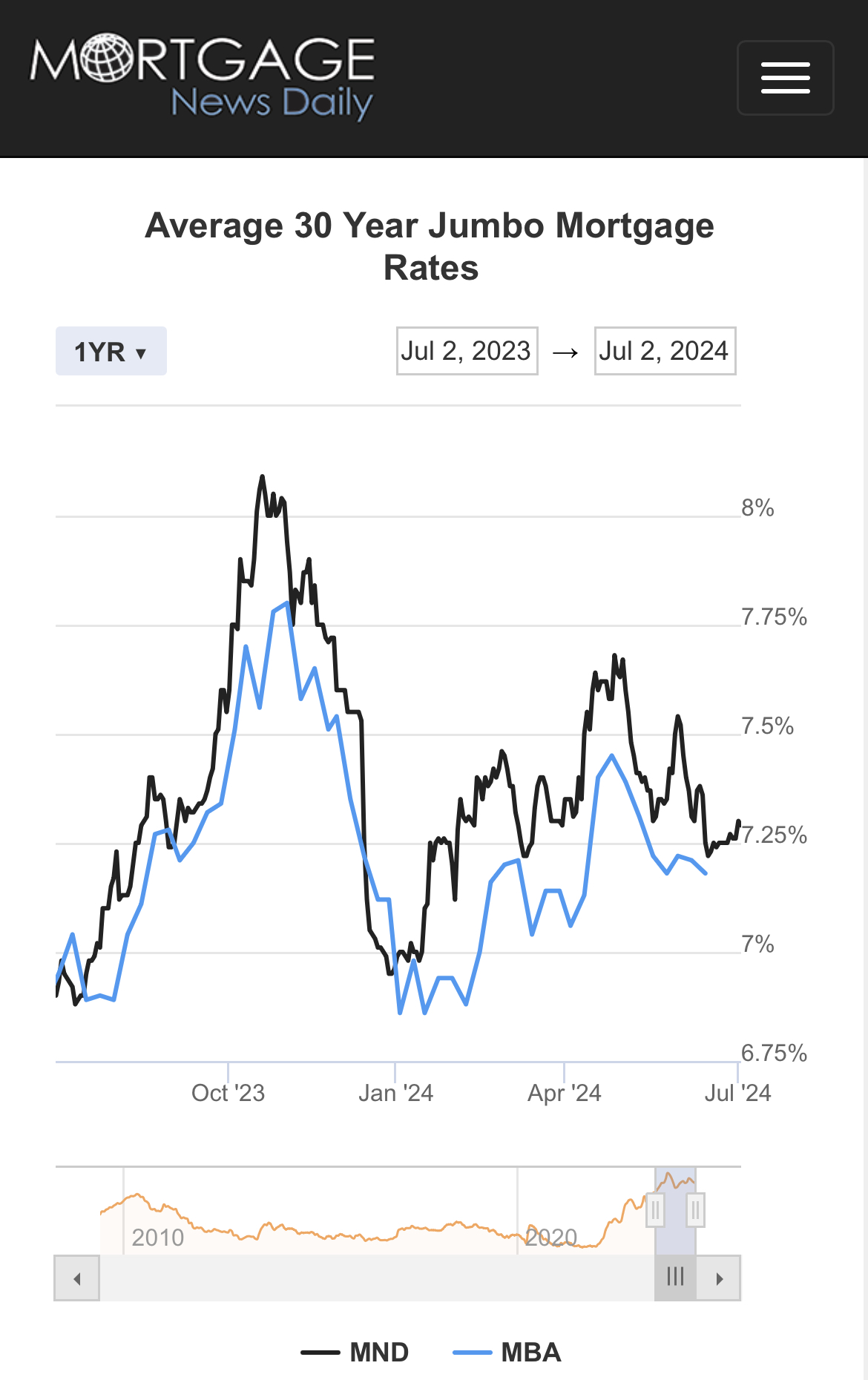
Here’s the thing though, despite the fact that we don’t have any actual rate cuts, mortgage rates are creeping down with the hope/anticipation of incoming rate cuts.

The other factor as to why we might not feel great is that we felt so great all through COVID. I might argue that this is a bit of a hangover from COVID. Affordability during COVID was fantastic in comparison to what it is today.

Our market and us have been extraordinarily resilient. The only concern is that we’re actually being tested now as opposed to navigating easy times.

Uncategorized • June 24, 2024

Fourth of July Events and Activities

Growing up at the beach, 4th of July has always been fun. Newport Beach in particular has always offered such a great variety of activities throughout the day. My personal favorite has always been to ride my bike all over the peninsula to visit friends and see everyone having a good time. However, there are plenty of parades, Here are just a few fun activities:

Parades

Balboa Island

Newport Shores

Newport Crest


Although fireworks are illegal in Newport Beach, there are still great ways to see some beautiful shows.

Fireworks

Huntington beach

Newport Dunes


Don’t forget the harbor!! The American Legion hosts the Old Glory Boat parade complete with prizes for “Best Decorated,” “Best Music,” and “Best Theme.”


Uncategorized • June 11, 2024

Primary Residence Sales vs Income Property: This Market is Not Equal

If you are a landlord or an open minded homeowner trapped by higher interest rates, think again. The side effect of higher interest rates are not created equal.

Not all segments of the market are created equal. Income property is particularly sensitive to rates because it typically trades based upon cash flow. Single occupancy or owner occupied properties typically trade based upon individual demand. With that said, our data is starting to show this stark contrast.

Multi family has nearly 10 months more inventory than we did this time last year. Our supply has doubled and prices are only up by 1%. When comparing that to single occupancy homes, condos and townhomes, we have about half a month more of inventory, supply is up by about 25%, but pricing is also up by about 10%.

So what’s the takeaway? Especially if you are a landlord and you’ve had a significant increase in the value of your property, you might have the opportunity to take those gains, negotiate on an upleg, generate more money and or reduce the effect of vacancy.

For example, I have one client who’s property has probably increased by about 150% and it generates about $12,800/month. However, for only 20-25% more for another property, they would generate closer to $35,000/month. That’s more than a 150% gain in monthly rental income!!

For you open minded homeowners, it could be that you get a much better value on your next property because you’re ok with becoming a landlord. In some cases, secondary units are detached AND some cities even afford you the opportunity to add more ADU’s and continue to increase your income!!

The last note, given that income property is very strongly correlated to interest rates, as rates come down, income property owners ought to expect continued and even more accelerated growth!!

Uncategorized • June 6, 2024

Additional Side Effects of Higher Interest Rates

One segment of the market that is affected by higher rates than most is income property. Income property typically trades based upon what a property generates on a monthly basis. When cross referenced against higher rates that eat in to profitability, prices start to come down to reflect the higher monthly payment to ensure proper cashflow.

It’s not to say that there are no cash buyers. However, sellers are forced to compete for those cash buyers more so than they did before. This is particularly true for properties in excess of more than 5 units where financing changes from residential to commercial.

What does this mean for the market today? Well, if you have a rental property that is less than 4 units, there is a possibility that you could trade into a property that generates a lot more money for a very similar property. For example, I have a client who could sell her property and acquire a new one at the same price, but generate twice as much in rent!! Yes her property taxes would go up. Twice the rental income is more than enough to offset higher property taxes. And given that she has owned the property for roughly 30 years, she can begin to depreciate the property again!!

Another client has a property where the net difference between the property they would sell and the property they would acquire would be about 20%. However, they would increase their cash flow by 3x!! That increased cash flow would not only make up for the higher property tax cost, but also the higher mortgage payment. This would be like getting a 50% bump in pay for doing the same exact job!!

Moral of the story, if you are a landlord with a single door or something that a young couple/family would be interested in purchasing, there is a strong possibility that you could generate more rental income for in a multi family property elsewhere. To find out if that could be you, contact me today!!

Uncategorized • June 5, 2024

Compiling Narrative for Current Real Estate Market

Mortgage application rates are down. Rates are nearing a 3 month low. Pending sales have been cut in half. We’ve been saying this for a long time, but the market continues to get weirder and weirder every day.

A lot of buyers have burnout. The days of “bids” appears to be over. However, there are still plenty of buyers who still want to get in to the market. Sellers are just needing to work harder in order to get more buyers to their property.

I think the hardest part of all of this is learning to remember what a “normal” market is. This means 3-6 months worth of supply. This can mean price reductions. This can mean negotiating. All of these factors are variables that contribute to a normal market. We just haven’t seen one in almost 5 years and we’ve all forgotten what that looks like.

I also think it’s important to say “normal” because the other option for a market that is beginning to slow down leads people to think that a crash is coming. The difference between then and now are the lending restrictions. Gone are the days of “no money down” lending. Naturally, people have quite a bit of equity in their homes. The equity in homes now isn’t just because housing values have increased by about 50% or more since 2019.

The other factor that makes this different from the recession is that there is still plenty of buyer demand. Buyer demand is largely limited to the entry level market. It is likely to sustain as unemployment remains low.

Ultimately, it’s weird to try to adjust to a “normal” market after nearly 4 years of what has been an absolutely absurd/crazy market. Historically low interest rates, 20% year over year growth, why wouldn’t this lead to a nutty market? The hardest part for all parties involved is to remember what a “normal” market feels like: some days on market, some price reductions, some negotiations, all of which contribute to an overall “normal” market.

Uncategorized • June 3, 2024

Pending Inventory is Dropping


Pending inventory is a great way to track the current level of demand for a community. As of late, our pending inventory is dropping suggesting that the days of “bids”, might be behind us.

Pricing is up year over year, but so are interest rates and it appears that our market is running out of runway for continued 20% year over year growth. Year over year, we’re still up by roughly 13% overall. However, at this time last year, we had roughly 60% of our inventory in escrow. Now, we’ve cut that in half. Following this, we ought to begin to see our days on market begin to grow as well.

Buyers are still out there. However, with higher rates and higher prices, they are being far more discerning and the percentage of inventory that is in escrow is a direct reflection.

Uncategorized • May 31, 2024

Real Estate Winds Might be Changing. What Does This Mean For You?

After an unanticipated, wildly hot market due to covid stimulus and near zero interest rates, pricing increased by 50-100%. Flash forward to today with high rates, high prices and our crazy train might have finally run out of steam. Here’s how to compose what this picture looks like now.

First, this doesn’t mean the market is going to come crashing down. I think it’s easy to refer back to the most recent painful event expecting a repeat. However, this time is different. We have strict lending conditions and most buyers are only empowered to purchase what they can afford. Second, unemployment is still very low such that most Americans can still afford to pay their bills.

The issue with our market now is affordability. My favorite way to look at this is calculating the average price of a home and the monthly mortgage payment assuming the buyer is putting 20% down. In this case of 2019, the average price for a single family home in Newport Beach was about $2,900,000. Interest rates at that time hovered just below 4%. That made the monthly payment just under $11,000/month. Flash forward to today. the average home is valued at $4,450,000 with rates at about 7.4%. That would bring us to a monthly payment of almost $25,000/month. The takeaway: although your home might be worth 50% more, it will cost your buyer nearly 2.5 times your carrying cost to purchase the home. Although wage growth is up, hard to deny that homes are not only up in terms of prices, the month over month carrying cost in conjunction with higher prices is the real nail in the coffin.

If we’ve experienced such a jump in less than 5 years, why aren’t we following Darwin’s theory of what goes up, must come down? Inventory. Naturally poor affordability would reduce demand and either sustain or reduce prices. However, many owners have low interest rates and are unwilling/can’t afford these higher prices and are locked in place: golden handcuffs. This tells us that there are likely a number of sellers who would like to move, but choose not to because of their financial circumstances. As a result, they are not listing their homes and we have less inventory. Right now, we have nearly half the volume of inventory that we did this same time in 2019. Normally half the volume of inventory would send pricing skyrocketing, but these high interest rates have killed demand. These two variables have been moving in conjunction with one another, propping up prices. But like I said, the winds might be changing.

The story is the same: demand is waning. However, we might finally have inventory building and days on market for existing inventory lasting significantly longer than it has. All of this being said, this varies by price point. First time home buyers are still competing and encountering some real struggles to get into the market. However, above 5 million and the market is fairly soft. It’s one thing to change your vacation plans for the year from 4 to 2 trips to accommodate your additional housing costs. Coming up with an additional $15,000 every month doesn’t equate to cutting your vacations in half.

Sellers, there are still buyers who have had lifestyle changes and need to make housing changes. Buyers, depending on your product search and market, you might actually be able to negotiate in contrast to submitting a “bid” for a home. We are finally beginning to approach a more “fair” market where negotiations can happen. For those who have been waiting for the real estate narrative to change, it’s here. For those waiting for a crash, we still don’t see it coming without a massive increase in inventory and or many Americans losing employment and unable to cover their expenses. Even still, the fed could always cut rates very quickly enabling home buying and employment again. This is the most classic, not so classic market that is following economic rules.