Uncategorized • May 14, 2024

Leaseback for Real Estate-What is it?

Navigating a move, a transaction, picking a new house and navigating moving your family all at the same time can be challenging. As a result, one option you might want to consider is a leaseback.


What is it?

A leaseback is a lease after sale. You get to stay in your home for an agreed upon amount of time in exchange for a dollar amount just like any other lease. Normally the terms of the leaseback are negotiated prior to accepting an offer. The reason being is that the time and total sum is likely to vary drastically. This could range from a free leaseback for 6 months to $25,000/month for 2 years. The possibilities are endless. It just depends on what both parties agree to. In general, a leaseback is structured just like a lease including length of term, monthly rate and security deposit. It’s really a lease that is attached to the backend of a purchase. It just happens to be negotiated in a purchase contract just like any other part of the contract.


But I’m a Buyer

If you’re a buyer, this may work to your benefit because maybe you’ve found the perfect home, but you still have 6 months left on your lease. Let the seller stay in exchange for making sure that your mortgage and property taxes are covered!! Buying a property that will need a heavy remodel or to be torn down? Let the seller stay for a dollar amount while you develop your plans and can break ground as soon as the seller is gone.


A leaseback can be an excellent tool for a number of circumstances. Most of all, a leaseback can remove some time pressure while you find your replacement home immediately. It’s another tool in a toolbox that can help you make the right decision for you and your family.

Uncategorized • April 26, 2024

Prices are up, do you sacrifice capital gains or your property tax base

Since the pandemic, real estate prices have increase by 50-100% for some properties. If you are in this position and your home no longer works for you, you’re confronted with a decision is you’re over the age of 55. Do you take the capital gains tax hit in order to maintain a lower property tax base or do you sacrifice a lower property tax base in order to defer your capital gains.


Exercising Prop 19 and taking the capital gains

First and foremost, consult your tax specialist. With prices jumped so quickly, there are some tax and financial considerations you may want to think about. First, let’s go over capital gains. The state of California affords you an allowance of $250,000 if you’re single and $500,000 if you’re married. That means that if you are married and your property has increased in value by more than $500,000, your capital gains ought to effect anything above your original purchase price plus $500,000. For example, if you purchased a home for $700,000, but you were to sell your home for $1,500,000, you ought to experience the capital gains tax total of $300,000. That is $700,000 (your original purchase prices) plus the $500,000 for a total of $1,200,000. This equates to a net difference of $300,000. Again, this is assuming you’re married. If you’re not married and experience similar gains, your capital gains total would be $550,000.
However, if you choose this route, hopefully you would be able to transfer your property taxes via exercising Proposition 19. Let’s use the same scenario and assume that you’re paying $9000/year in property taxes as a result of your purchase. If you were to purchase a new home for $2,000,000, your property tax math would look as follows:

$2,000,000-$1,500,000= $500,000

$500,000 (property tax rate of .0121)= $6050

$6050+(original property tax payment) $9000= $15,050

Although $15,050 is more than the original $9000/year, it’s still less than the $24,000 that would have been the tax rate if you had not exercised Proposition 19.


This means that scenario one equates to a capital gains tax on $300,000 assuming you’re married and but saving almost $10,000/year in property taxes. So what does scenario two look like?


Deferring your capital gains

Scenario two consists of deferring your capital gains, but taking on the higher property tax base. It starts with converting your property to a rental. This means that you would need to move out of your home and renting your home for two years. At this point, you can sell your home. However, within 45 days of selling your home, you are obligated to identify 3 other properties that you might purchase. For more specifics, contact an accommodator. Another time frame that is relevant is how quickly you can close on the next home. From the sale of your first property, you have 180 days to close on the next. Even after you close, you still cannot occupy the property for another 2 years. However, you should be able to move in after that time frame. Again, consult your tax professional for specifics. Deferring your capital gains tax might be worth it. Assuming the same scenario, the financials equate to the following: no capital gains tax, but new property taxes of $24,000/year.


In most cases, it probably makes sense to transfer your property tax base. However, if you can’t exercise Proposition 19, maybe deferring your capital gains tax would be best.

Uncategorized • April 19, 2024

Will Real Estate Prices Go Up 10%?

Barbara

Here’s why Barbara is so optimistic on pricing. Assuming a buyer puts down 20% for a home, every 1% change in the buyer’s mortgage rate, changes the buyer’s purchasing power by 10%. That’s a huge swing for a lot of potential buyers. Given the purchasing power change and based on Barbara’s input, this should be a 10% increase in housing prices. I don’t agree with a one for one correlation though. Here’s why.


My Response

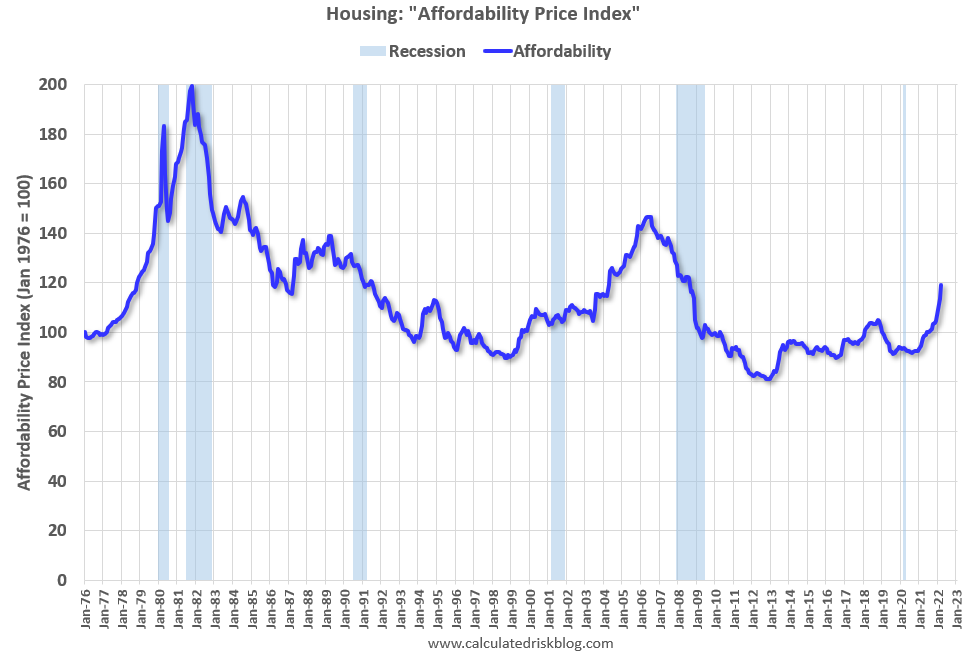
My response is affordability and pent up sellers. Let’s start with affordability. Affordability has been very poor for a very long time Housing Affordability Index. The affordability calculation is a combination of mortgage rates and housing prices. I think we’ve experienced sustained poor affordability because we’ve had an odd combination of relatively high interest rates and low inventory.

What Barbara doesn’t mention is that if rates do come down, we might unlock pent up sellers. The combination of lower rates contributing to more inventory could result in an increase in housing prices that doesn’t directly correlate with interest rate changes. It also may not directly correlate because there is such a small portion of the population currently that can afford the housing as it stands. We do not have the same loose lending that created the recession.


The Future

Lower rates ought to bring more sellers to the market as well as increase the affordability for buyers. I don’t know what the exact math is as far as would a 1% change in mortgage rates reflect a 5% increase in pricing because of the increased buyer pool? I’m not sure. What I do know is that if buyers can’t afford homes, properties won’t sell. Affordability would likely need to improve with more inventory. This would combat the one for one correlation between rates and prices. However, I think the important correlation now is affordability and inventory. I will see what I can do about finding some information on both affordability and inventory. Stay tuned!!

Uncategorized • April 19, 2024

Real Estate: Rates and Legislation

If I had to draw a metaphor for our market, I would say that it feels a little like people are using Dorothy’s line “lions and tigers and bears, oh my!”

First, mortgage rates. Mortgage rates are holding high because inflation is much stickier than anticipated. Hope for rates coming down continues to be a challenge due to the unknown future with gas prices. In the last six months to a year, we’ve had a very strong correlation to rates. When rates pop up, buyers seem to get cold feet and either suspend their search and or back out of a transaction.


Second, legislation. This one has a lot to unpack. Let’s go with the low hanging fruit first: the mansion tax. Although I’m in Orange County, the mansion tax may prevent would be sellers out of LA moving to Orange County or vice versa. Asking either party to pay an additional $200,000 or more in order to complete a transaction that goes to taxes is a tough pill to swallow. The side effect of the measure results in a less mobile market overall with much heavier financial consequences for buying or selling a home.

Landlord Tenant laws is the next legislative challenge. Stories of squatters in guest homes or occupying owners’ second homes is growing. In the past, this wouldn’t have been such an issue, but with changes to landlord tenant laws, squatters are gaining tenants rights. When a squatter has tenant rights, removing the squatter becomes a long, arduous process. Many would be landlords have become deterred from owning rental property. However, one gentleman has turned this into an opportunity. To learn more about Flash Shelton, click here.

Last piece of legislation is the NAR ruling regarding buyer agent commission. This one is tough because we’re not exactly sure what this could look like. I’ve spoken with other agents and we have our two cents. These thoughts range from the first time home buyer who is properly represented is gone to why would a seller not incentivize buyers agents to bring their clients to their property. Another thought is that this opens the door for a lot of future legal problems because of Dual Agency conflict. I’ll unpack dual agency more in the future. Lastly, I think this opens the door for a record number of off market transactions. Why not try to get in touch with sellers directly for your buyers and take control of the conversation by finding the deal? This ruling will likely reduce transparency for all parties involved.

In total, I believe that all of the legislation was well intended. However, I’m not sure that the result will match the intention.


Uncategorized • April 1, 2024

Market Update-Q1 2024

I like to look at data quarter by quarter especially when we have had few transactions and we expect low transaction rates to continue. As a whole, we’ve had continued price growth. Corona del Mar had 3 sales in Q4 that were all over 20 million and those sales slightly skewed the data. I don’t think this reflects a major correction there by any means. Our demand continues to outpace demand and continues to drive pricing.


The fed has given us hope regarding rates expected to come down. For most borrowers, rates have already begun to come down from their highs just before Thanksgiving. Lower rates make it easier for buyers to purchase property either being able to afford more home or have a lower mortgage rate.


Newport Beach

Current

Average Sale Price: $4,320,381

Number of Sales: 128

Active: 152

Average List Price: $5,015,156


Last Quarter

Average Sale Price: $3,420,690

Number of Sales: 139


Corona Del Mar

Current

Average Sale Price: $4,536,823

Number of Sales: 61

Active: 50

Average List Price: $4,224,095


Last Quarter

Average Sale Price: $5,892,302

Number of Sales: 43


Laguna Beach

Current

Average Sale Price: $3,972,620

Number of Sales: 59

Active: 114

Average List Price: $4,267,053


Last Quarter:

Average Sale Price: $3,818,749

Number of Sales: 57


Costa Mesa

Current

Average Sale Price: $1,438,877

Number of Sales: 119

Active: 39

Average List Price: $1,517,695


Last Quarter

Average Sale Price: $1,351,174

Number of Sales: 109

Uncategorized • March 26, 2024

Home Attraction

You ever drive down a street and find that you’re naturally more attracted to one home than another? What draws you to that particular home over another. Here’s why you might be more drawn to one property over another.


Outdoor lighting- We’re all naturally drawn to light, bright spaces. The same is true for homes as well.


Fresh paint- Paint can make a huge impact from increasing contrast between the body color and trim. Fresh paint can also make your property seem more well cared for.


Updated address numbers- Just like design and architectural trends, your address numbers can be apart of that.


Landscaping- Green grass, bright flowers, again, high contrast, can make your home feel bright, fresh, cared for and a very cheery beginning for your future buyer.


American Flag- Not only does it physically protrude from your home, it also adds movement that will help draw eyes to your property.


Potted plants- Don’t have a front yard or much beyond your garage? Brighten up your home with some potted plants with brightly colored flowers or natural herbs. Always a good rule of thumb to add color and movement in order to draw attention to your home.


As a seller, it’s important to initiate that eye gaze from your potential buyer. These are just some easy tricks to initiate that natural attraction to your property.

Uncategorized • March 13, 2024

Rent Vs Sell

There has been a lot of discussion of Golden Handcuffs for a lot of owners given where interest rates are currently. We’ve also had a significant jump in pricing over the course of the last few years. If your home no longer suits your needs, the new interest rate marketplace and change in pricing can make the question of how to proceed very challenging.


Pro Rent

Here are the side effects of choosing to sell. First, capital gains tax. Depending on how long you’ve owned your home, the value of your home and whether or not you’re married, you could have a hefty capital gains tax bill. I’ll take myself as an example. Between price growth and the remodel I did at my home, my property has increased in value significantly. As a result, my tax bill would be pretty hefty. As a result, I decided to rent my property. The rental income I’m collecting is enough to cover my expenses and even have positive cash flow. I can still sell my property down the road and defer my capital gains tax by completing a 1031 exchange.


Second, new interest rate market. In order to upgrade, the interest rate would be nearly twice as high and would increase my monthly payment even to take on the same mortgage let alone taking on a larger mortgage. Now, by no means do I expect to have a similar payment, but in order to upgrade to what I’d like next, the payment would be more than I’d like it to be. The new mortgage rate market has really presented challenges for those of us looking to upgrade/expand.


These all sound like reasons to not sell. However, there might be a reason to sell after all. One, you might not want to be a landlord. If you’ve never been a landlord and it’s intimidating, you might not have the appetite. That’s ok.


Pro Sell

There are solutions to the mortgage market these days. They range from paying down your rate, temporary buy downs, and more. I’m very pro temporary buy downs in order to remove some burden for some time with the expectation/hope that rates come down. It’s not guaranteed, but we can hope. Either way, when you look at property value changes over the course of the last decade versus rent growth, rent growth can’t touch property value growth. If that’s the case, and you’re planning on “upgrading”, aka purchasing a more expensive property, you’re likely to increase your equity because growth is typically on a percentage basis instead of nominal growth.

My favorite example of this was a woman who purchased property in the 1970’s. She decided that she couldn’t afford the oceanfront property that was 25-30% more than non-oceanfront. Not only is that oceanfront probably worth more than double the non-oceanfront, considering the percentage growth, those properties have probably increased by more than 300%. Forgive me as the numbers are from memory, but I think the oceanfront was about $300,000 and the non-oceanfront was about $225,000. If this is the case, the non-oceanfront is $6,750,000 and the oceanfront is $9,000,000. That difference of $2,250,000 was only a difference of $75,000 many years prior. Percentage growth makes a great case for selling your home and purchasing a new one despite the change in interest rates.


Conclusion

The good news is that there are no wrong answers. The only concern is what the side effects are for each decision.

Uncategorized • January 29, 2024

2024 Housing Market- “Never Bet Against America”

I think it’s appropriate to quote Warren Buffett: “Never bet against America”.


Nationally

I’ll also add that all of the emphasis will be on Orange County real estate. There are areas that have had some softening like the desert and the bay area.


Jerome Powell may have successfully achieved the soft landing at least within Orange County. Employment is still high. Wage growth has leveled off. The fed appears to be done hiking rates. This has afforded lenders to shrink their margin between the 10 year treasury and their mortgage rates because the Federal Reserve has indicated that they’re done increasing rates.  Inventory is still generally low. Buyer demand is low. This is continuing to prop up pricing.


Local Market

What we expect to happen is as follows. As interest rates continue to come down, we expect to see more sellers come to market as they decide that they’re willing to take on, what is likely, a higher mortgage rate than what they currently have. Buyers who have been on the sideline waiting for affordability to increase either via pricing coming down, rates coming down or their wage growth, are now available to get in with lower rates.

This presents a bit of an odd position because as prices hold steady and rates come down, this actually improves affordability aka decreases the buyer’s monthly payment. I’m going to circle back to my Warren Buffett quote: “Never bet against America”. Interest rates coming down can provide justification for an increase in pricing. Given how poor current affordability is right now, I don’t expect pricing to go up exactly in line with rates coming down. However, if a difference of one point in an interest rate means a difference in payment by 10%, I think we have justification for as much as a 10% increase assuming rates continue to come down. Rates peaked towards the end of October/beginning of November. We’re already down by nearly 1.5 percent. That 10% increase should already be sitting and waiting for us.

With affordability as low as it is right now, I suspect that we will have positive price growth somewhere between 3-10%. This is assuming that employment stays roughly where it is and we don’t see a massive change in wages.


Variability in Price Points

We might see variability in how different markets are affected by this. With higher priced transactions correlated with cash, not sure we will see a significant jump in the higher priced markets. A lot of the higher priced markets have been somewhat immune to affect of higher rates.

However, the first time home buyers who have been sitting on the sidelines waiting for a great opportunity, they’re more inclined to jump into the market. We also have the population of move up buyers who might be more inclined to move for a growing family or changing needs. The move up buyers ought to provide inventory.


The Big Takeaway

The big take away: we still ought to have growth for 2024. However, the likelihood that it will match anything that we saw through COVID is probably very low. It appears that we’re moving back to business as usual for real estate. Like I said at the top “Never bet against America”.

Uncategorized • January 11, 2024

2023 In Review

2023 was a significant surprise. I think we always look at our most recent pain with the expectation that is how our next pain will appear, aka a massive cliff with prices plummeting. I think that when rates popped up above 5%, many people expected to see a correction. Obviously, that’s not what happened.


Instead, what we saw was a decreased volume of active inventory aka a constrained supply that more or less correlated with reduced demand. As a result, we didn’t experience lower prices. Instead, both prices and rates went up. This combination resulted in one of the lowest affordability rates historically.


Just like the correlation between low supply and low demand, which propped up pricing, we had a higher correlation of cash for many transactions. Buyers paying cash were certainly less concerned with rates and the affordability without a loan.


What can we expect for 2024?

Uncategorized • December 2, 2023

Calculating your Rate of Return

I will start this by saying that there are many different ways to calculate your rate of return. Options can vary from the very basic to emphasis on the minutia including the individual water bills and electrical bills.


The way that I was always taught was to calculate your cash on cash rate of return. This answers the question of how is my money doing within this property/asset. However, this formula is useful for calculating your own rate of return as opposed to the more open ended understanding of how someone else might view it. Because of this gap, I think that these are the two iterations that are most valuable. I’ll start with my own property.


First, I bought a property that was not upgraded or remodeled. Second, I lived in and remodeled the property before moving out and turning it into a rental property. These numbers are likely to seem better than average given those circumstances.


My numbers look as follows if you’re using cash on cash rate of return:

(rental income).  (mortgage payment).          (HOA)       (property taxes)

6500(12).            –          2800(12)           –         450(12)      –      1000(12)

100,000


78000- 33600 – 5400 – 12000

100,000


27000

100,000


=27%


I didn’t purchase the property for $100,000 which is why I have my mortgage payment included. The alternative is to calculate the rate of return on a more basic level. In this context, it would look as follows:

Rental Income   Purchase Price

[6500(12)].    /.    $700,000.    =.    11%


Both systems are accurate. On a personal level, I think it’s valuable to calculate your own numbers. Calculating a rate of return on a more basic level affords you the opportunity to compare your property to others more effectively for if you are considering buying or selling.